On Prana & Prashna Upanishad 2.13
🌾 How does yoga therapy help? Where does yogic wisdom apply to our daily lives and our modern-day nervous systems?
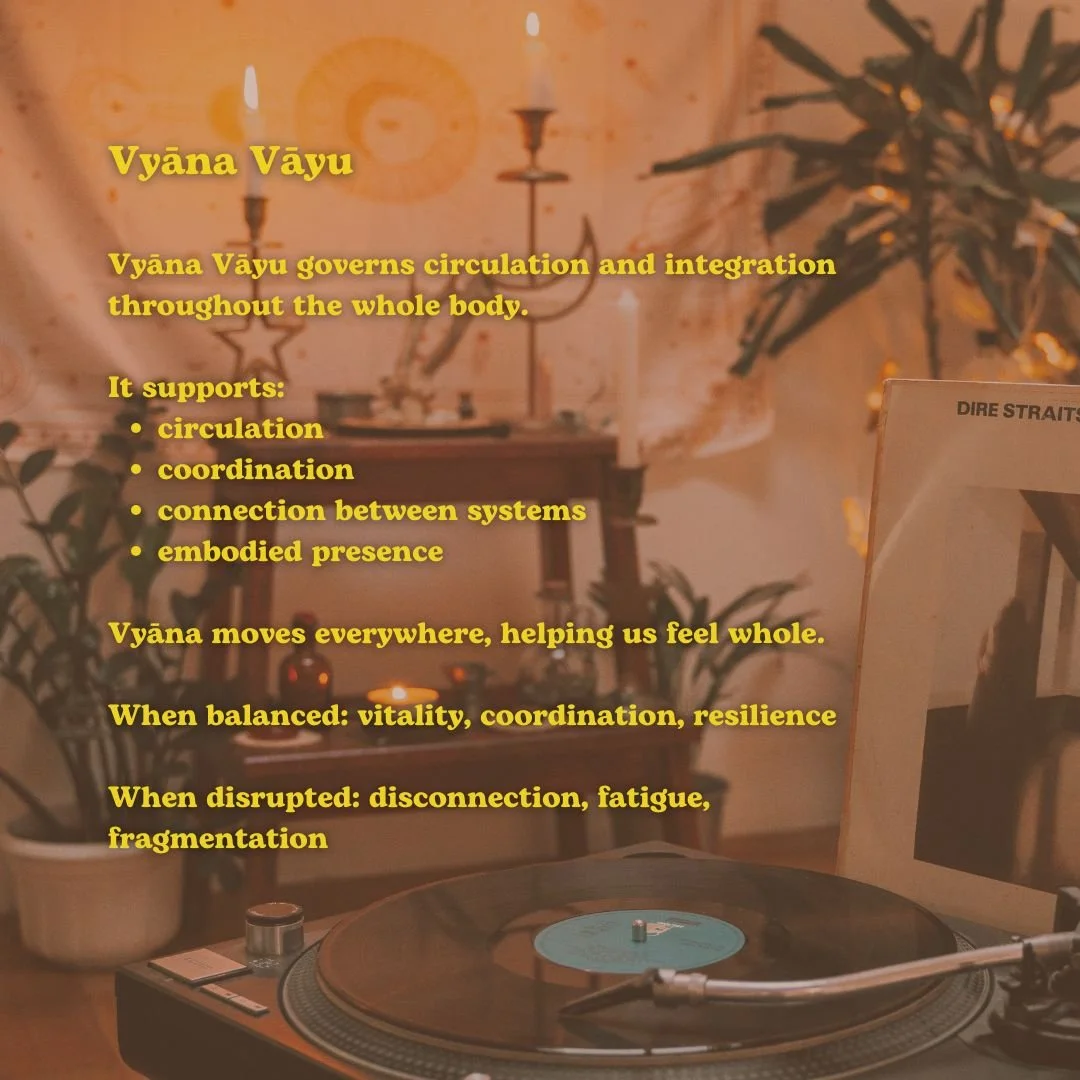
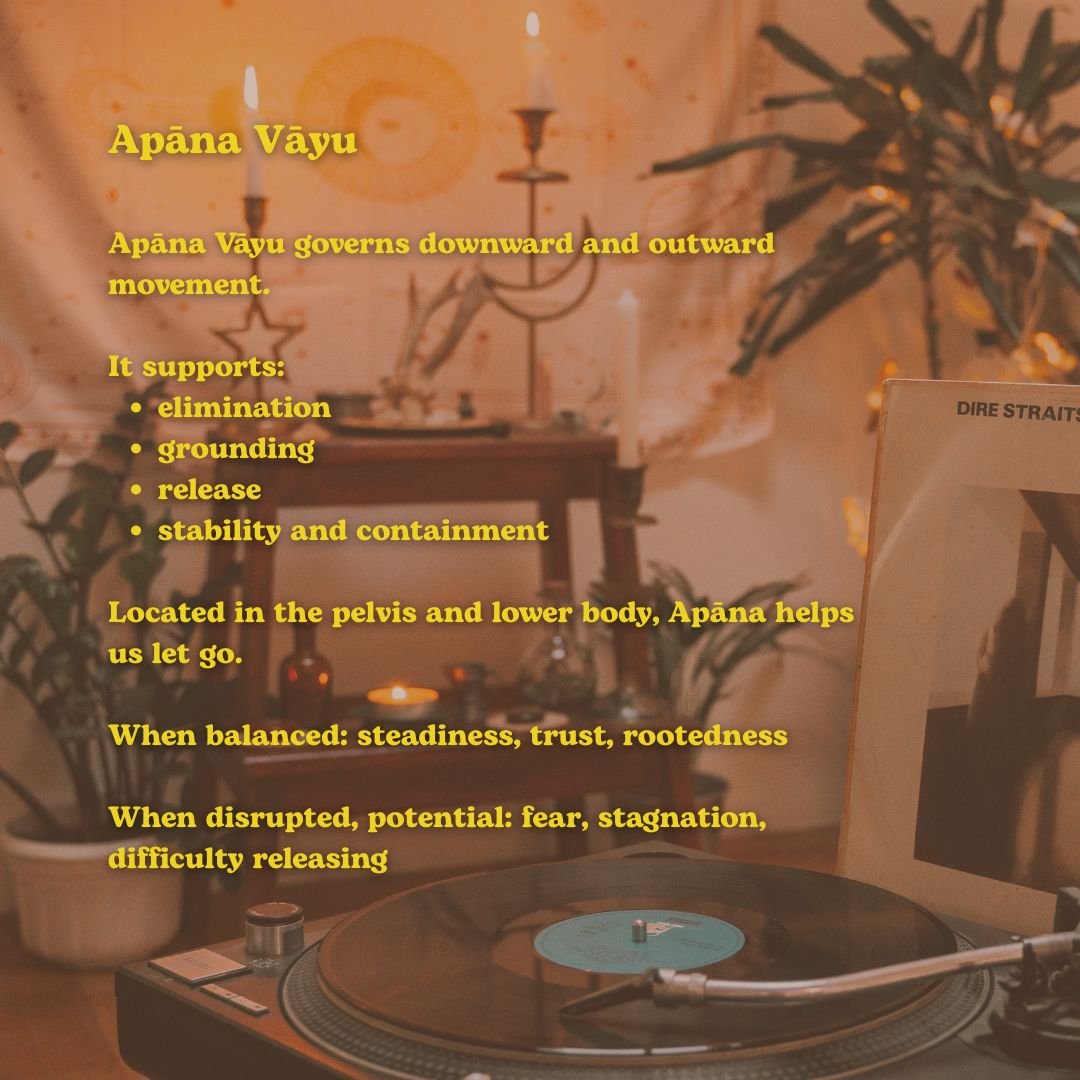
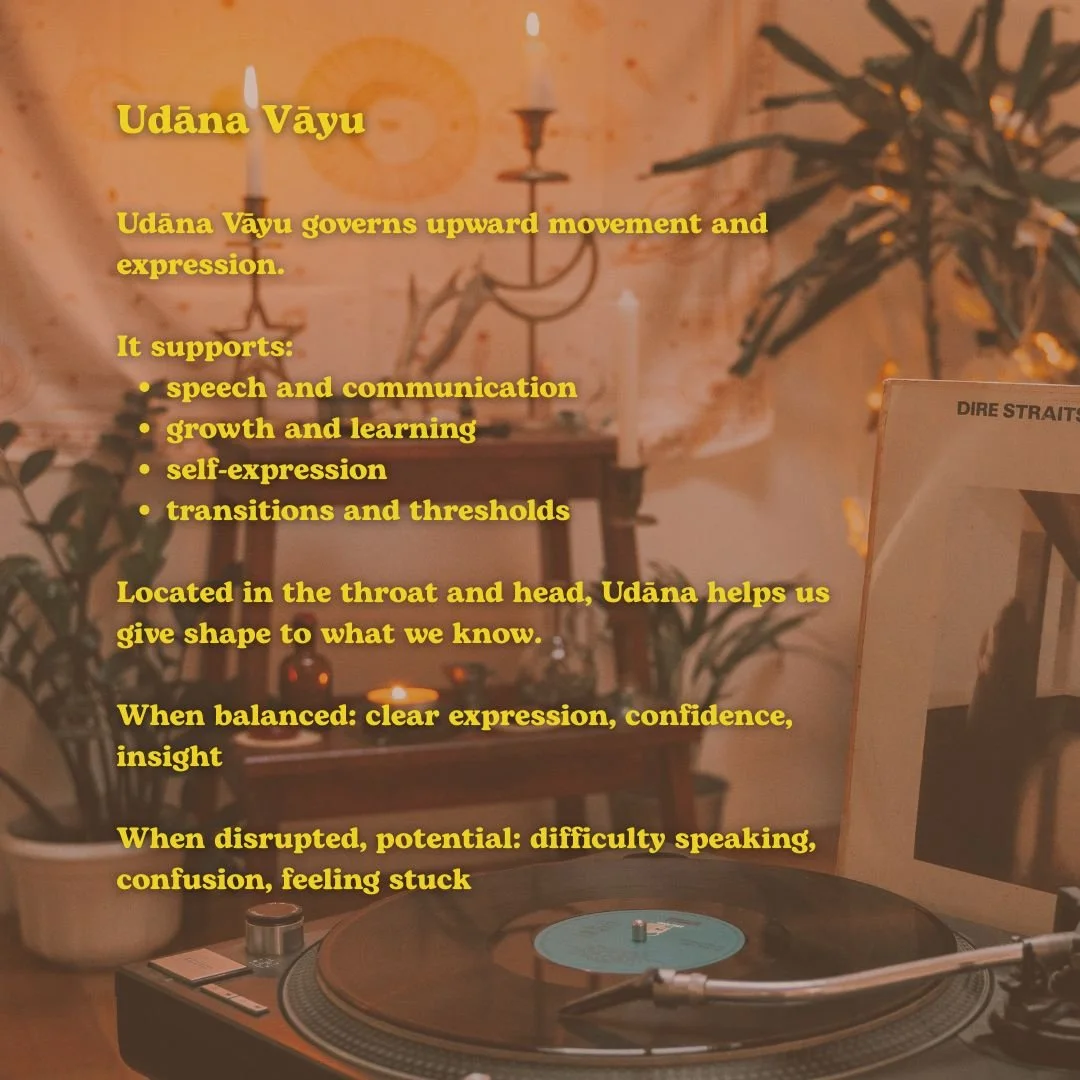
In times of stress, transition, and uncertainty, the vāyus often fall out of rhythm.
Yoga, breath, sound, and gentle ritual exist to support balance, not to override the body.
While intensity may be alluring, without integration, we burn up crispy.
I love working with the wisdom of the vāyus, for it reminds us: Life already wants to move... and we can learn how to support that, rather than force it.
The vāyus teach us that healing is about flow... and while control is often associated with breath mastery, I consciously use "restraint through relationship" or "skilled holding" with breath, rather than control alone, as it is less forceful and more relational within the context of this therapeutically-oriented post. For prana is not something we control, it is what holds ua.
This mirrors how we heal, and properly situate, the ego in this era... not violent annihilation, but the taming and hanging out with of a puppy (at some levels)... anyways!
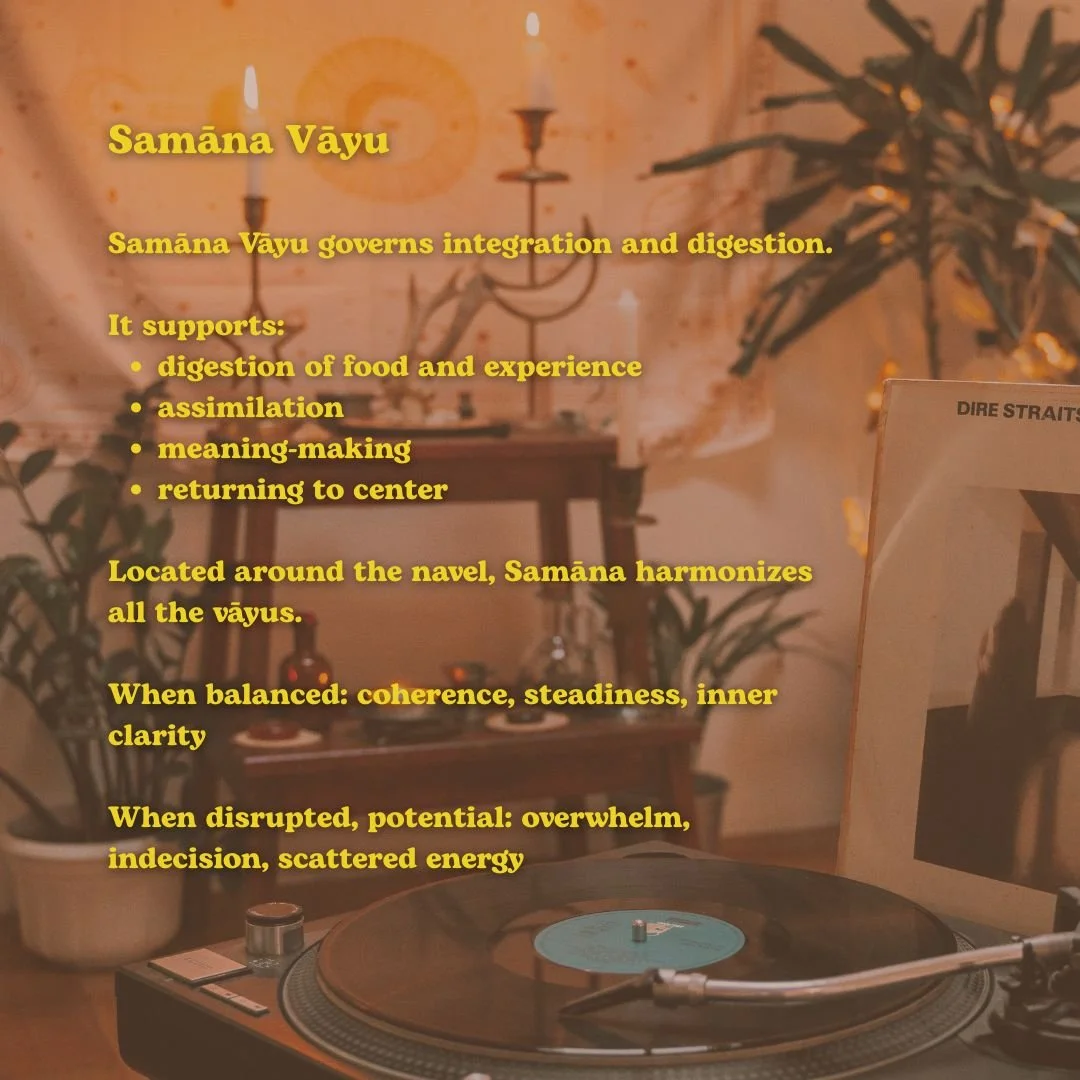
Samāna Vayu is the quiet work of integration. the heart of my work, and the function my Samāna Yoga Therapy sessions serve: a skilled and gentle relationship with your nervous system, your intuition, and the best pace for your life, now.
Connect or book a session at templeofgoldenether.com
Read more on the Prashna Upanishad 2.13: templeofgoldenether.com/blog
What other dimensions of yoga therapy are you interested in exploring?
#yogatherapy #yoga #holistichealing #healing #jyotish
Continued…
Prāṇa is not something we control. It is what holds us.
“All that exists here” — not just bodies, but:
perception
movement
vitality
cognition
continuity
And “what exists in heaven” — meaning:
subtle realms
cosmic order
unseen intelligences
time, rhythm, and law
All of this is said to be under the power of prāṇa.
This is not domination language.
It is organizing intelligence language.
Prāṇa is not an object.
It is the condition that allows things to exist at all.
The maternal invocation
This line is crucial:
“Protect us as a mother her sons.”
The Upaniṣad does not ask prāṇa to:
enlighten us
elevate us
grant powers
It asks for:
protection
nourishment
guidance
continuity
This is not ascetic transcendence.
This is cosmic caregiving.
Prāṇa is invoked as:
sustaining
patient
relational
non-coercive
This directly aligns with:
Samāna Vāyu (digestion, integration)
our emphasis on tending rather than striving,
a dharma of care rather than conquest
Prosperity and wisdom
The verse closes with a very grounded prayer:
“Bestow upon us prosperity and wisdom.”
Not bliss.
Not liberation.
Not transcendence.
Prosperity here (śrī or bhūti) implies:
sufficiency
stability
life-supporting conditions
Wisdom (prajñā) implies:
discernment
timing
ethical knowing
This is wisdom for living, not for escaping life.
Why this verse is resonant with our work
This verse quietly affirms several of our core orientations:
Prāṇa as field, not force
Intelligence as relational, not heroic
Care as cosmic, not sentimental
Wisdom as digestible, not overwhelming
It also undermines:
performative spirituality
domination-based models of “energy work”
extractive uses of subtle language
Life itself knows how to organize life. May we be held well enough to digest what comes, to remain coherent, and to grow in wisdom without harm.
This is not about “activating” prāṇa. It is about trusting its intelligence.
Why this matters now (collectively)
In an era of:
nervous system overload
spiritual excess
fragmented attention
constant acceleration
This verse offers a radically different posture:
“Hold us. Protect us. Teach us how to live.”
That is a prayer for:
caregivers
healers
systems designers
teachers
those tending life in unstable conditions
It is not dramatic.
It is enduring.
All that exists is held within the movement of life itself. May we be protected as children are protected, nourished in what we need, and guided toward wisdom that supports life.